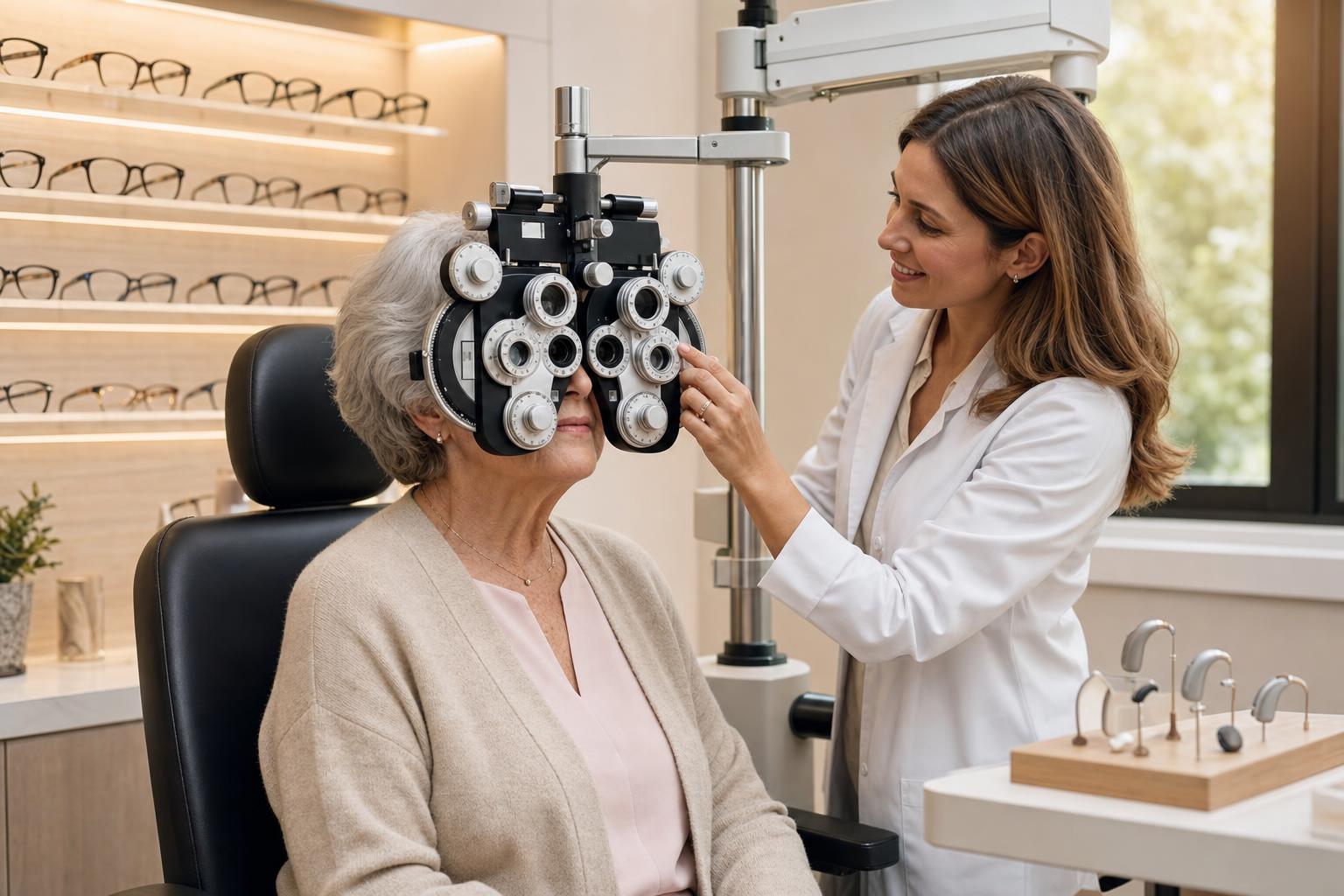
One of the biggest surprises new Medicare enrollees face is discovering that Original Medicare pays almost nothing for routine dental cleanings, eye exams, glasses, or hearing aids. These three benefit gaps affect nearly every senior, yet they are also the areas where a smart plan can save you thousands of dollars a year. This 2026 guide walks through exactly what Parts A and B do and do not cover, the narrow medical exceptions that many people miss, and why a Medigap policy cannot fill these gaps.
You will then learn the three main ways to build DVH coverage (Medicare Advantage bundles, standalone dental/vision/hearing insurance, and discount plans) so you can pick the approach that best matches your health needs and budget. New for 2026: KFF confirms 98% or more of Medicare Advantage plans still offer DVH, but Milliman and ATI Advisory report that vision hardware allowances and standalone dental limits have quietly tightened, so read the fine print before you enroll.
Key Takeaways
Original Medicare excludes routine dental, vision, and hearing care
Medigap only fills gaps in Medicare-covered services, not DVH
98% or more of 2026 Medicare Advantage plans bundle DVH benefits
2026 MA vision hardware allowances and dental limits are shrinking
What Original Medicare Covers (and Doesn't) for DVH
Original Medicare was designed in 1965 to cover hospital and medical services, not routine oral, vision, or hearing care. That framework has barely changed. In 2026, Parts A and B still leave beneficiaries paying 100% out of pocket for the vast majority of dental, vision, and hearing services.
Here is a snapshot of the standard exclusions and the narrow medical exceptions where Medicare will actually pay.
Dental: excluded, with a few hospital-based exceptions
Federal law explicitly excludes routine dental care from Medicare. In most cases, Medicare does not cover dental services like routine cleanings, fillings, tooth extractions, or items like dentures and implants.
There is a narrow but important exception. Medicare can cover dental services when they are medically necessary and inextricably linked to another covered medical treatment. Examples include:
Pre-treatment dental exams and extractions before an organ, bone marrow, or kidney transplant
Dental clearance before heart valve replacement
Treatment of oral infections before or during chemotherapy or head and neck radiation
Dental work required before dialysis to clear an active infection
Jaw reconstruction after trauma or oral cancer surgery
When these exceptions apply, Part B typically pays 80% after your 2026 deductible of $283, and you owe the remaining 20%. Everything else is out of pocket. For a full breakdown of 2026 Part A and Part B coverage rules, see our companion guide.
Vision: no routine exams or glasses, but medical eye care is covered
Original Medicare does not cover routine eye exams for glasses or contacts, refractions, or standard eyewear. However, Part B does cover medical eye care, including:
Cataract surgery and one pair of standard eyeglasses or contact lenses after the procedure
Annual diabetic retinopathy exams for people with diabetes
Yearly glaucoma screenings for high-risk beneficiaries
Diagnostic tests for macular degeneration and other eye diseases
The post-cataract eyewear benefit is the single most valuable vision perk in Original Medicare, and many seniors do not know it exists. Our overview of free Medicare preventive services explains which eye-related screenings and wellness visits Part B pays for at $0.
Hearing: diagnostic tests yes, hearing aids no
Original Medicare covers diagnostic hearing and balance exams when a doctor orders them to evaluate a medical problem like sudden hearing loss or vertigo. Part B pays 80% after the deductible.
What is not covered: hearing aids themselves, exams to fit or adjust hearing aids, and routine annual hearing screenings. In 2026, hearing aids typically cost $200 to $2,500 per pair for over-the-counter devices and roughly $2,000 to $8,000 per pair for prescription models. HearingTracker's most recent survey of more than 1,100 buyers pegs the average paid price at $2,694 per pair, with private-pay prescription pairs averaging $3,432 and Costco Hearing Aid Center at roughly $1,674. This remains one of the most expensive gaps in Original Medicare.
The Medigap Myth
Medigap (Medicare Supplement) plans are federally standardized to help pay Medicare's deductibles, coinsurance, and copays for services Medicare already covers. Because Original Medicare excludes routine DVH, Medigap cannot fill that gap either. If you want dental, vision, and hearing coverage, you must add it separately.
Trusted by Thousands
Find a Better Medicare Plan in Ohio
Compare quotes from top-rated carriers with free, unbiased help from licensed advisors.
Why Medigap Doesn't Add Dental, Vision, or Hearing
A common frustration for new enrollees is learning that even a top-tier Medigap plan like Plan G or Plan N will not pay for a cleaning or a pair of glasses. This is by design. Medigap plans exist to "fill the gaps" in Original Medicare's cost sharing, not to expand the list of covered services.
Federal rules standardize each Medigap letter plan so that Plan G from one insurer offers the same core benefits as Plan G from another. Routine dental, vision, and hearing simply are not on that standardized benefit chart. A few carriers offer non-standard "innovative benefit" riders or bundle a separate DVH policy alongside your Medigap, but those are technically separate products with their own premiums and rules.
If you want a deeper explanation of how these gaps work, our guide on what Medicare doesn't cover breaks down every category of excluded service and what fills each one. You may also want to review the Plan G coverage and cost breakdown to see exactly which benefits it does and does not include, so you can plan the DVH layer separately. For a broader look at how all 10 Medigap letters compare, our Medigap plans comparison chart shows every benefit line by line.
That leaves three practical paths to DVH coverage: Medicare Advantage, standalone insurance, or discount plans.
Solution 1: Medicare Advantage Plans With DVH Benefits
Nearly every Medicare Advantage (Part C) plan in 2026 bundles some form of dental, vision, and hearing coverage. According to KFF's 2026 Medicare Advantage Spotlight, nearly all individual Medicare Advantage plans (98% or more) are offering vision, dental and hearing benefits, as they have in previous years, virtually unchanged from 2025. Many charge a $0 monthly premium, though you still pay your Part B premium of $202.90 in 2026.
What DVH benefits typically look like in MA plans
Dental: Preventive cleanings and exams often at $0, with annual maximums of roughly $1,000 to $3,000. Major work like crowns, dentures, and implants can hit that cap on a single visit.
Vision: One routine eye exam per year plus a frames/lenses allowance, typically $100 to $400 per year or every two years depending on the plan.
Hearing: Routine hearing exams plus a fixed allowance or copay structure for hearing aids, typically $500 to $2,500 per ear every 1 to 3 years.
The 2026 catch: same access, leaner benefits
While KFF says access to DVH benefits is stable, other 2026 analyses show plans are quietly trimming generosity. Milliman found that vision hardware saw a meaningful shift in structure in 2026 and that standalone comprehensive dental limits declined about 8%, the second straight year of reductions in vision hardware value. ATI Advisory also documents that dental offerings edged down slightly (roughly 97% to 96% of plans) even as vision and hearing prevalence held steady. Consumer reporting further shows dental annual maximums being cut (for example from $3,000 down to $1,500 in some plans) and stricter rules on major services like implants and dentures. On top of that, CMS terminated the VBID pilot at the end of 2025, and 2026 is the first year without the program, which had funded targeted supplemental benefits for roughly 7 million enrollees.
Medicare Advantage still saves you money on DVH, but it comes with strings attached. Network restrictions, prior authorization, and annual maximums can leave you exposed if you need extensive dental work or premium hearing aids. And unlike Medigap, in 2026 the federal MA in-network out-of-pocket limit may not exceed $9,250 and the combined in-network and out-of-network limit is $13,900, though the KFF-reported average in-network MOOP across plans is $5,421 and the average combined in-network and out-of-network limit is $9,825.
Pros
Bundles DVH into one plan, often with a $0 premium
98% or more of 2026 MA plans include dental, vision, and hearing
Preventive dental, vision, and hearing exams usually free
Some plans include hearing aid allowances up to $2,500 per ear
Cons
Dental caps of $1,000-$3,000 fill quickly with major work
Vision hardware allowances shifted and dental limits fell about 8% for 2026 (Milliman)
Network restrictions and prior auth limit provider choice
VBID pilot ended after 2025, cutting some plan extras in 2026
If you are still weighing this tradeoff, our detailed comparison of Medigap vs. Medicare Advantage explains the broader financial and access implications of each path, and our overview of how Part C really works walks through networks, prior authorization, and star ratings.
Free & No Obligation
Compare Medicare Supplement Plans in Ohio
See if you qualify for a better Medigap rate in less than 2 minutes.
Solution 2: Standalone DVH Insurance Policies
If you want to keep Original Medicare plus Medigap (and the freedom to see any doctor who accepts Medicare), you can purchase a standalone dental, vision, or hearing insurance policy from a private carrier. These plans are sold directly to consumers and are independent of your Medicare coverage.
How the major carriers compare in 2026
Carrier / Plan
Typical Monthly Cost
Annual Dental Max
Waiting Periods
Best For
Humana Extend 1250 (DVH)
~$36-$41
$1,250
6 mo. basic; 12 mo. major
Budget DVH bundle
Humana Extend 2500 (DVH)
~$67-$74
$2,500 (implants covered)
90 days basic; 12 mo. major
Bundled DVH with implants
Humana Extend 5000 (DVH)
~$82-$100
$5,000 (implants covered)
90 days basic; 6 mo. major
Big dental work + vision/hearing
MetLife / NCD
~$35
~$2,500
Often no waiting period
Immediate major dental needs
Physicians Mutual
~$40-$60
Tiered, no cap on some plans
No waiting on preventive
Predictable senior coverage
Delta Dental
~$30-$50
$1,000-$2,000
6-12 months for major
Large dentist network
Humana's Extend lineup is one of the most popular 2026 options because it bundles dental, vision, and hearing into a single monthly premium. The Extend 5000 plan carries a $5,000 annual maximum, in-network preventive dental exams and cleanings covered 100% with no waiting period, coverage for routine vision and hearing exams, and $2,000 annual implant coverage (subject to a 6-month waiting period and a $4,000 lifetime implant maximum). Hearing aids are included through TruHearing, with the Extend 5000 Arkansas certificate listing a $699 copay per ear for an advanced-level TruHearing aid, and premium-level devices running closer to $999 per ear.
Waiting periods matter
Most dental plans impose a 6 to 12 month wait before covering major services like crowns, root canals, and dentures. This is meant to prevent people from buying a plan the day they need a $2,000 crown. Two exceptions worth noting: some MetLife/NCD-branded plans explicitly waive waiting periods, and Medicare Advantage dental benefits are not allowed to include waiting periods by federal rule.
Medicare Savings Tip
If you know you need major dental work in the next year, prioritize a plan with no waiting periods (like certain MetLife/NCD designs) or a higher annual maximum like Humana Extend 5000 ($5,000/year with implant coverage). Paying $30-$40 more per month is worth it if it saves you $2,000+ on a single crown or implant.
Standalone vision and hearing plans
Vision-only plans through VSP or EyeMed typically run $10 to $22 per month and cover an annual exam plus a frames/lenses allowance around $150 to $250. Hearing-only insurance is less common, but many DVH bundles include a modest hearing aid allowance. With HearingTracker's 2026 survey showing an average price paid of $2,694 per pair (down from $4,672 in 2018) and average OTC price of $502 per pair versus $3,432 for a prescription pair, private pay only, including Costco, many seniors do better negotiating cash prices at Costco Hearing Aid Center (averaging around $1,674 per pair) or buying an FDA-authorized OTC device for a few hundred dollars.
Solution 3: Discount Plans and Community Resources
Discount plans (also called dental savings plans) are not insurance. Instead, you pay an annual membership fee (typically $80 to $200 for individuals) to access pre-negotiated discounted rates at participating providers. In exchange for the discount, you pay the dentist directly at the time of service.
Dental Insurance
Pays a portion of each claim
Predictable coverage percentages
Annual maximum ($1,000-$5,000)
Waiting periods for major work
Discount Plan
15-50% off at participating providers
No annual maximum or waiting periods
You pay full discounted price at visit
Savings vary by procedure and dentist
Popular 2026 options include Aetna Vital Savings (roughly $7.99 to $9.99 per month for dental-only, or $9.99 to $12.99 with prescription discounts, offering 15% to 50% off at 285,000+ practice locations), Humana Dental Savings Plus (around $6.99 per month plus a $15 enrollment fee), and AARP-branded savings programs available to members. Typical discounts run 15% to 50% off cleanings, crowns, and root canals.
Community and low-cost resources
Dental school clinics: Supervised students provide care at 30% to 50% below private practice rates
Federally Qualified Health Centers (FQHCs): Sliding-scale fees based on income
Area Agencies on Aging: Maintain local lists of low-cost dentists, mobile clinics, and vouchers
Mission of Mercy and other charitable events: Free care for basic services
State Medicaid: Dental benefits vary by state but can supplement Medicare for dual-eligibles
Compare Medicare Supplement Plans in Ohio
Find the right Medigap plan with free, unbiased advice from licensed advisors.
There is no single "best" answer. Your right approach depends on your current health, expected dental work, and how much premium flexibility you have.
Quick decision guide by situation
You are healthy and mostly need preventive care: A cheap discount plan ($8-$15/month) plus community resources often beats paying for insurance.
You expect major dental work or implants in the next year: Prioritize no-waiting-period insurance (like MetLife/NCD) or a high-maximum plan (Humana Extend 5000 at $5,000/year with implant coverage).
You need hearing aids: Consider a Medicare Advantage plan with a generous hearing allowance, or shop cash prices at Costco (averaging around $1,674 per pair) and pair with a modest DVH bundle.
You want simple, all-in-one coverage and lower premiums: Medicare Advantage is designed for you, but understand the network, MOOP, and 2026 benefit-trim tradeoffs.
You want to keep Original Medicare plus Medigap freedom: Buy a standalone DVH policy or add a discount plan to your Medigap coverage. Our guide on pairing Medigap with Part D shows the same modular approach applied to prescription drugs, and the full monthly cost of Medicare breakdown shows how DVH fits into your total budget.
Medicare Savings Tip
Layer your coverage. Many seniors get the best value by combining a modest dental insurance plan for preventive care, a discount card for major work beyond the annual max, and community resources (like a local dental school) for anything else. This layered approach often costs less than $50 a month total.
Frequently Asked Questions
Does Medicare ever pay for dentures?
No. Original Medicare does not cover dentures, partial plates, or the fittings that go with them, even after tooth loss from a covered surgery. The only exception involves the inpatient hospital stay itself when dental work is performed as part of another covered hospital procedure. To get denture coverage, you need a Medicare Advantage plan with comprehensive dental benefits or a standalone dental insurance policy like Humana Extend 2500 or 5000.
Are eye exams covered by Medicare if I have diabetes?
Yes. Part B covers annual diabetic retinopathy screenings for people with diabetes, performed by an eye doctor legally authorized to provide the service. You will owe 20% of the Medicare-approved amount after your 2026 Part B deductible of $283. This is separate from a routine vision exam for glasses, which Medicare does not cover.
How much does a hearing aid cost with Medicare Advantage in 2026?
It depends heavily on your specific plan. In 2026, most MA plans offer $500 to $3,000 per ear every 1 to 3 years, though some limit you to specific brands or in-network audiologists. With average prescription hearing aid prices around $3,432 per pair private pay and the overall average paid falling to $2,694 per pair (down from $4,672 in 2018), most seniors still pay $1,000 to $3,000 out of pocket even with MA coverage.
Can I add dental to my Medigap policy?
Not to the Medigap policy itself. Medigap plans are federally standardized and do not include routine DVH benefits. However, some insurers sell separate dental/vision/hearing riders or standalone policies you can purchase alongside your Medigap plan. If you are shopping the market, our guide on how much a Medicare Supplement plan costs can help you compare Medigap options while you decide on DVH separately.
What's the difference between a dental discount plan and dental insurance?
Dental insurance charges a monthly premium, pays a percentage of covered services, and typically has annual maximums, deductibles, and waiting periods for major work. A discount plan charges a lower annual fee, has no claims process, and simply gives you a percentage off at participating dentists. Insurance is better for predictable coverage; discount plans are better for people who want immediate savings on major work without waiting periods.
Related Articles
Ready to Compare Guides Plans?
Get personalized Medicare Supplement quotes in Ohio. Free, no obligation — compare plans from top-rated carriers.